Understanding tractor tire sizes is crucial for efficient and sustainable farming. The right tires translate to lower fuel consumption, healthier soil, and reduced long-term costs. This guide will decode the often-confusing tire size codes, helping you make informed decisions. For more detailed information on specific tire sizes, check out this helpful resource on 12-4-38 tractor tires.
Decoding Tractor Tire Sizes: A Practical Guide
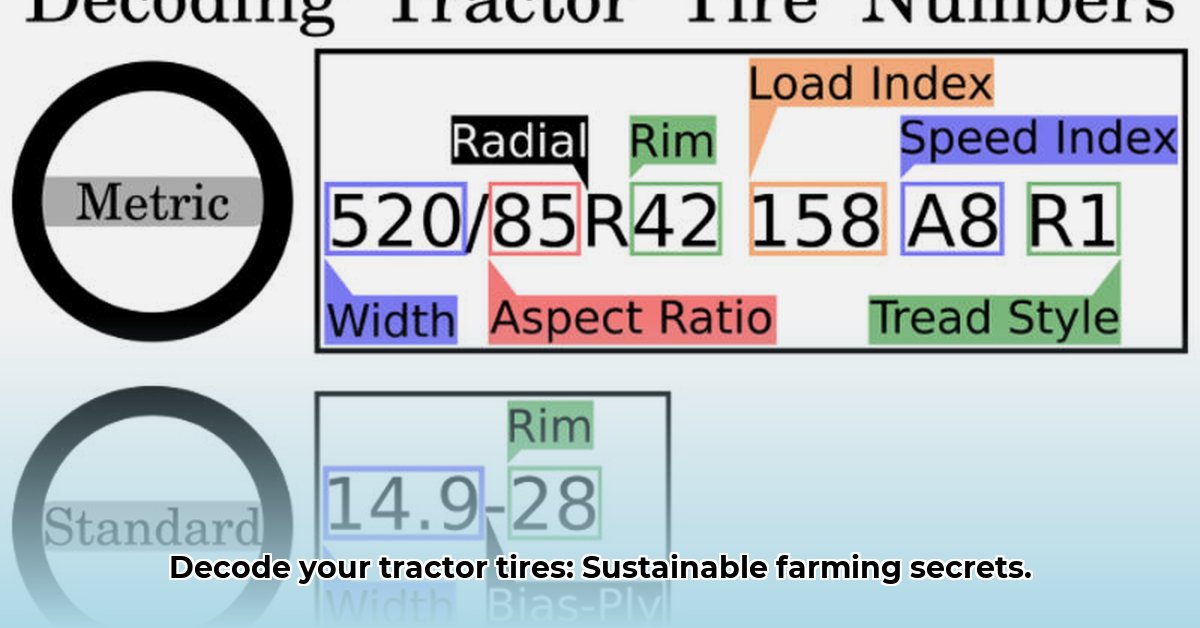
Tractor tire size markings aren't random; they convey vital information about tire dimensions and capabilities. Let's decipher the codes. You'll often see sizes presented in two systems: standard (inches) and metric (millimeters).
Standard Tire Sizes (Inches)
A typical standard size looks like this: 11.2-28.
- Width (11.2): This represents the tire's section width in inches. A wider tire generally covers more ground per rotation.
- Aspect Ratio (Implicit): The aspect ratio (tire height relative to width) isn't explicitly stated in this simplified notation. Modern tire specifications typically include this critical information, though not always on older equipment.
- Rim Diameter (28): This is the diameter of the wheel rim in inches. The tire must match the rim diameter for safe and effective operation. Using the wrong rim size can cause serious damage.
Why is aspect ratio crucial? While not explicitly stated in all formats, aspect ratio significantly impacts tire performance. A higher aspect ratio means proportionally taller sides, influencing ride quality, traction, and stability.
Metric Tire Sizes (Millimeters)
Metric sizes appear differently, for example: 340/85R28.
- Width (340): This is the tire's section width in millimeters.
- Aspect Ratio (85): The aspect ratio is explicitly stated as a percentage (85%).
- Radial Construction (R): The "R" indicates radial construction, associated with better fuel efficiency and less soil compaction.
- Rim Diameter (28): As before, the final number (28) denotes rim diameter in inches.
Wouldn't it be helpful to know exactly how all these factors interact to impact fuel efficiency? Research shows that radial tires, properly inflated, can improve fuel efficiency by up to 10% compared to bias-ply tires.
Tire Types and Their Applications
Different tire types suit different tasks and soil conditions. Choosing correctly optimizes performance and minimizes soil compaction.
Bias-Ply Tires
These are more robust and generally less expensive initially. However, they tend to be less fuel-efficient and can compact soil more. They're ideal for rugged terrain or situations demanding high durability.
Radial Tires
Radial tires offer superior traction, better fuel efficiency, and less soil compaction. While more costly upfront, their long-term advantages make them a worthwhile investment for many farmers.
R-1, R-3, and R-4 Tires
These designations denote the tire's intended use:
- R-1: General-purpose agricultural tires suitable for various applications.
- R-3: High-traction tires for wet or muddy conditions. Their deep tread pattern provides exceptional grip.
- R4: Low-pressure tires ideal for turf or applications where surface protection is paramount.
Which tire type is right for you? This depends heavily on your soil type, typical workloads, and priorities (fuel efficiency vs. initial cost). A careful assessment of your needs is essential.
Matching Tires to Your Tractor and Tasks
Always consult your tractor's owner's manual. It specifies recommended tire sizes and inflation pressures, critical for optimal performance and safety. Mismatched tires can lead to damage, inefficiency, and potential accidents.
Proper inflation is critical. Underinflation increases soil compaction and fuel consumption; overinflation causes premature wear and tear. Regular pressure checks (ideally with a gauge) are crucial for maintaining optimal performance.
Tire Maintenance: Extending Tire Lifespan
Regular inspections for cuts, bulges, or embedded debris are vital for early problem detection. Addressing small issues promptly prevents larger, more expensive repairs. Tire rotation also extends their lifespan by promoting even wear. Proper storage when tires aren't in use protects them from the elements and enhances longevity.
What's the single best maintenance tip you can do? Regularly check your tire pressure. Doing so can dramatically extend the life of your tires.
Sustainable Farming and Tire Selection
Sustainable practices prioritize environmental responsibility. Tire selection plays a significant role. Radial tires reduce fuel consumption, and proper inflation minimizes soil compaction. Consider the tire's entire lifecycle, including responsible disposal.
Dr. Sarah Miller, Agricultural Engineering Professor at Purdue University, states, "Choosing the right tires significantly impacts both your bottom line and environmental sustainability. Proper tire selection and management are crucial in modern sustainable agriculture."
Conclusion: Empowering Your Farming Decisions
Understanding tractor tire sizes is a crucial aspect of efficient and sustainable farming. By carefully considering tire size, type, and maintenance, you can significantly improve your operations while conserving resources and protecting the environment. This knowledge empowers you to make informed choices that benefit both your farm and the planet.